BLACKPOOLE PAVILION NOOSA
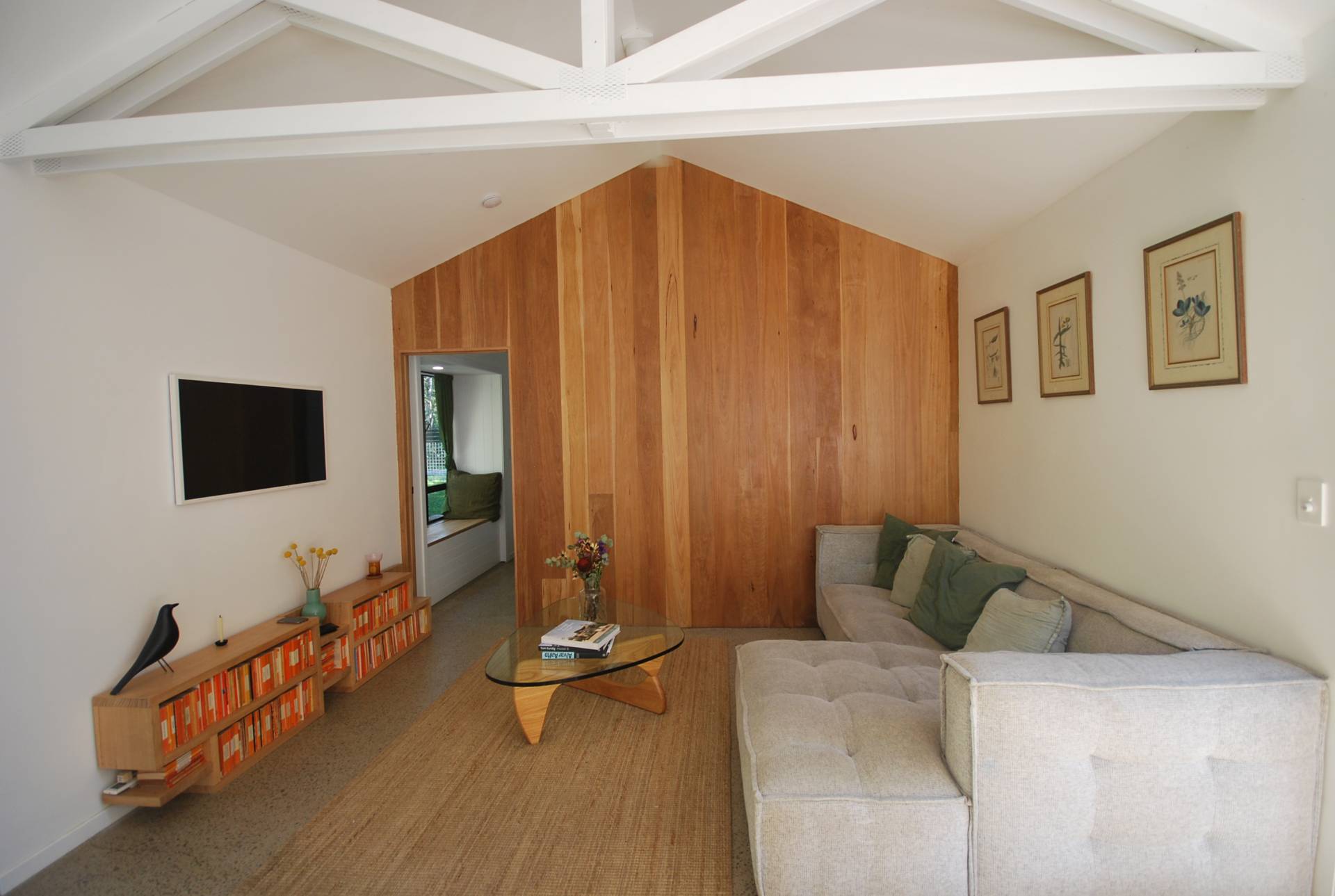
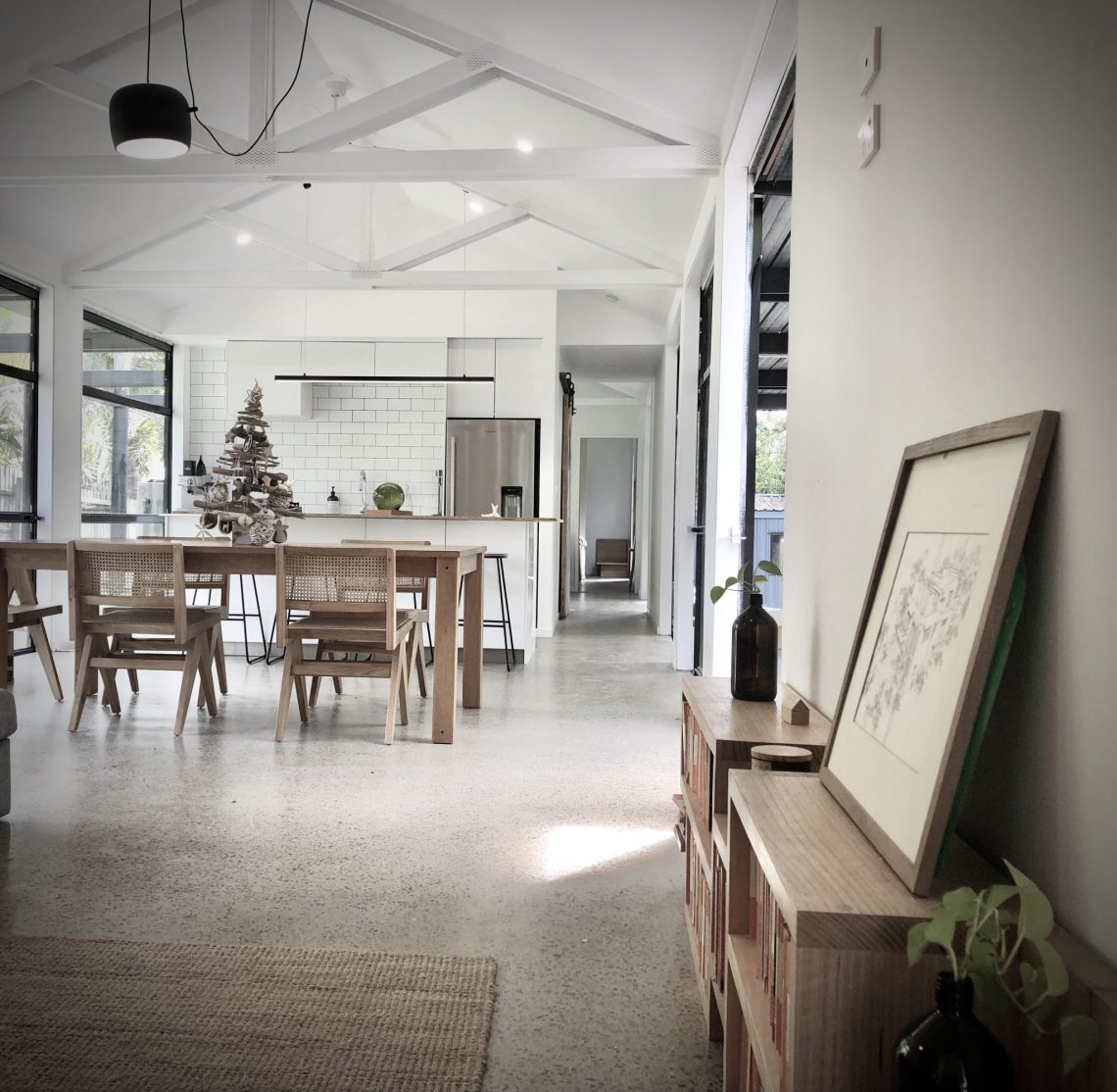
This project is my own home, located in Lake Cooroibah — a quiet lakeside community in rural Noosa. The house was originally designed and built in 1993–1994 by renowned local architect Gabriel Poole, during a period that produced some of the most thoughtful and climatically responsive residential architecture in South East Queensland.
When we purchased the property, the house felt somewhat shed-like in its presentation, yet it was immediately clear that it had strong foundations, intelligent planning, and enormous potential. While fundamentally well designed, years of wear and limited maintenance had taken their toll, and the home was in clear need of considered cosmetic renewal rather than wholesale change.
Anyone familiar with my previous blog posts will know that I have long admired Gabriel Poole’s work. To be in a position to purchase and thoughtfully adapt one of his homes felt genuinely special — a rare opportunity to engage directly with a piece of Sunshine Coast architectural history.
The house benefits from near-perfect northern orientation, dramatic cathedral-like raked ceilings, and oversized doors that dissolve the boundary between indoor and outdoor living. These qualities provided a strong framework for a sensitive and respectful update that aligned with contemporary living while retaining the essence of the original design.
The renovation process began with the removal of the existing vinyl chequered flooring to expose and assess the concrete slab beneath. Fortunately, the slab was in excellent condition and could be honed and sealed, transforming it into a durable, polished surface suited to both the climate and the architectural language of the house.
Another significant intervention involved replacing the original gas-strut doors — affectionately referred to as “Lamborghini-style” — which previously incorporated corrugated iron and laserlite panels. These were retrofitted with glazing and powder-coated black, giving them a more refined presence and allowing them to function as genuine doors rather than purely utilitarian elements.
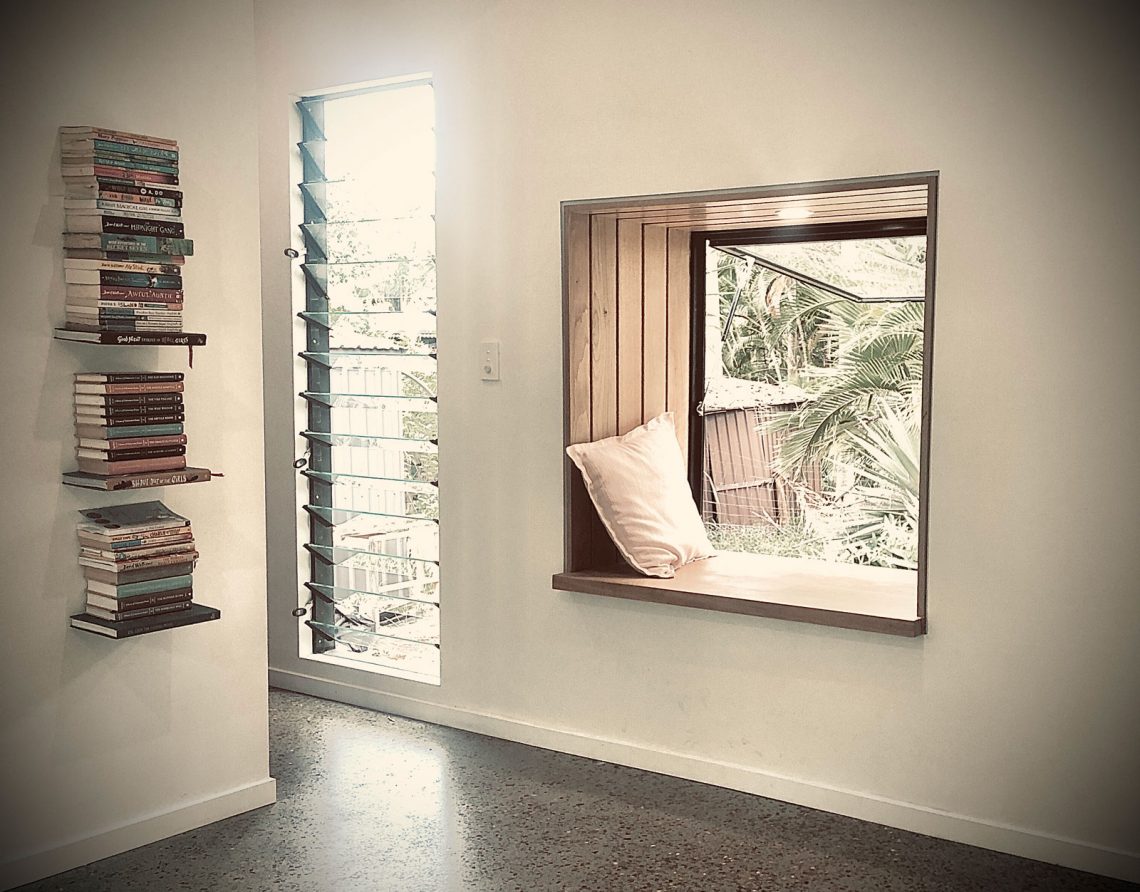
One of my favourite moments in the home is captured in the second image above. When the walls are opened, a window seat — or “snuggery” — is formed, creating a beautifully intimate connection with the landscape. This small window box frames the garden and pool and is internally lined with American oak shiplap, adding warmth and tactility to the space. The aluminium awning window operates on gas struts, allowing the occupant to sit with their legs outside in the garden, inside as part of the room, or closed entirely for a quiet retreat with a book.
This seemingly modest design gesture has a powerful spatial effect, psychologically transforming what is otherwise a narrow four-metre-wide room into a far more generous and flexible living space.
The project reflects my broader approach to home design, drafting, and building design across the Sunshine Coast and Noosa region — respecting strong original architecture, responding to site and climate, and enhancing the everyday experience of living in the space. Whether designing a contemporary beach house or reworking an existing home, the goal remains the same: thoughtful, site-driven design that improves how a building is lived in.
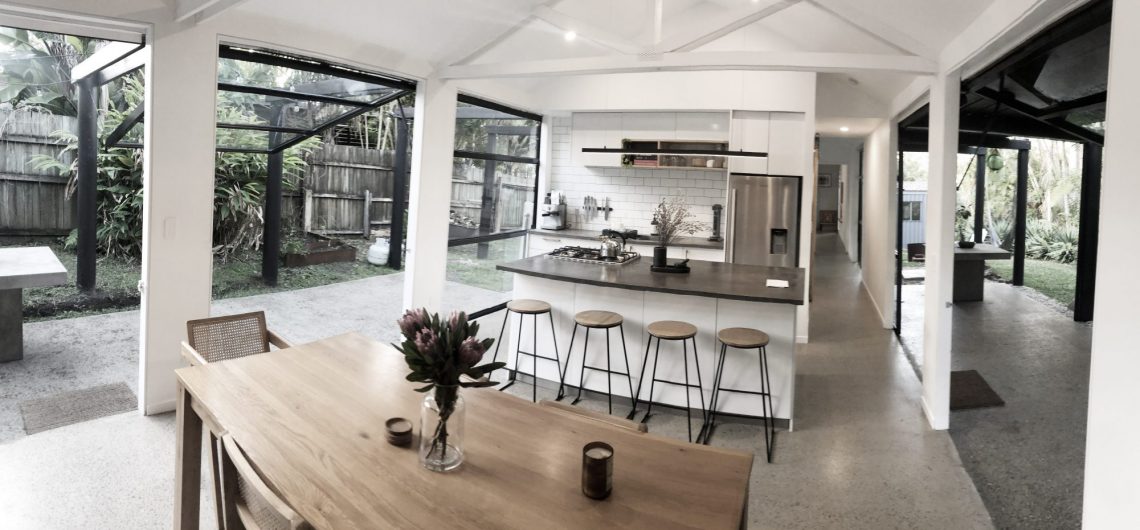
At first glance, the bold black exterior of this home may seem at odds with my previously expressed views on the pitfalls of so-called “black box” architecture on the Sunshine Coast . Some may even call it hypocritical. However, as with all considered building design, this decision was far from superficial. It was the result of a careful balance of environmental performance, site conditions, materiality, and architectural intent. It is also worth noting that the home is not yet complete, with future timber and weathered steel elements planned to further soften and enrich the exterior palette.
The decision to adopt a dark exterior emerged from several key considerations.
Firstly, the interior of the home is intentionally light and restrained. A predominantly white interior required a contrasting exterior to avoid an overly uniform and visually fatiguing result. A fully white home, inside and out, would have lacked depth and balance.
Secondly, the long, slender building envelope and near-perfect northern orientation significantly limit solar exposure. Only the northern elevation receives direct sunlight, and even then, it is largely shaded or glazed, with solar access primarily occurring during winter months. The eastern elevation benefits from morning shade provided by a mature mango tree, while the western elevation is similarly protected in the afternoon. From a building design and energy-performance perspective, this makes the dark external finish both practical and appropriate.
The monolithic external colour also plays an important architectural role. It unifies a diverse range of materials and textures, blurs the distinction between the original pavilion and the new extension, and allows the project to be read as a single, cohesive home design rather than a series of additions.
In reality, much of the northern façade is composed of expansive glazing rather than solid wall, meaning there is minimal exposed cladding. Where solid walls do occur, they are either heavily insulated or shaded during the most intense periods of summer sun, further reinforcing the environmental logic behind the design.
Finally, the choice was made partly for aesthetic reasons and partly as a personal homage. As a child, I watched a Poole house being built in Sunshine Beach — the first black house I had ever encountered. It stood out as something entirely different from what was typical of Sunshine Coast home design at the time, yet it sat quietly within its landscape. That memory has stayed with me, and this project nods to that same balance of boldness and restraint.
This project reflects my broader approach to Sunshine Coast building design and drafting: site-responsive, environmentally considered, and unapologetically individual — whether designing a contemporary beach house or a highly tailored residential home.